











Wednesday, 1 July 2026
Some basic clarifications about the confusing concept of “consciousness”
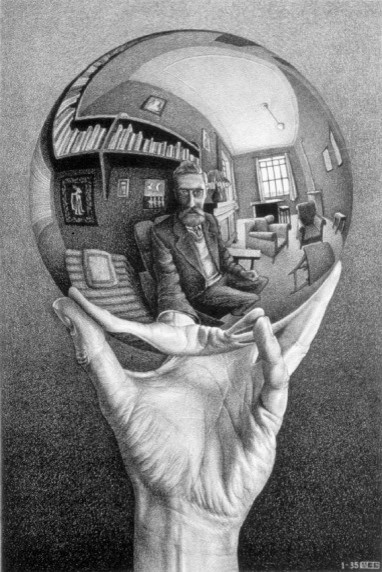 The word “consciousness” may refer simply to the state in which you are awake, as opposed to states in which you are not (for example, when you’re asleep, or in a coma, or under general anaesthesia).
But the word “consciousness” may also refer to the content to which you have conscious access (for example, memories, thoughts or perceptions of the world around you).
One particular form of such content is self-awareness—awareness of yourself as a specific individual with your own life story, plans and so on.
Going beyond your awareness of yourself as individual, you may also have social consciousness—a concern for the well-being of other people, your community, your species and the entire planet.
* * *
When it comes to epistemological clarifications (attempts to explain consciousness), I have always found Anil Seth’s approach highly instructive, in which he asks the usual basic questions.
The first question, where in the brain consciousness lies, preoccupied researchers when functional brain imaging technology first became available in the 1990s and let them observe that some of the brain’s structures (such as the claustrum) were highly involved in consciousness and others, such as the cerebellum, were far less so. But they soon realized that these findings did not tell them much about what made consciousness possible.
This brought them to the question of how consciousness works—by what neural mechanisms do we become aware of something? To answer this question, researchers began examining such matters as the phenomena by which the rhythmic activity of the brain’s neurons is synchronized.
The next question, which in a sense subsumes the first two, is what is the nature of our conscious processes? This question has given rise to the major general theoretical frameworks which often touch on the ontological questions that philosophers examine in this regard. We will explore five of these major theories in the second part of my presentation tomorrow.
Lastly, there is the question of when, from an evolutionary standpoint, conscious processes first appeared in various species. This question is of necessity highly speculative, and it raises further questions, such as what are the functions of these conscious processes and, no less important, what is the function of suffering in animals?.
And on top of all that, the icing on the cake, so to speak, is the great distinction so well formulated by philosopher Ned Block in 1995, between access consciousness (the cognitive availability—presence or absence—of certain information for reasoning, guiding behaviour, reporting verbally, etc.) and phenomenal consciousness (the subjective experience that makes us feel what it is like to have a given experience with its qualitative characteristics or “qualia” (why we experience space as vast, time as passing, and colours, sounds, textures and pain as having different natures).
So when you consider all the questions that the idea of consciousness raises, you can clearly see that it is no simple matter!
The Emergence of Consciousness | Comments Closed
Wednesday, 6 May 2026
A new brain network involved in Parkinson’s disease challenges our view of the primary motor cortex

In a field like neuroscience, there’s so much knowledge, and it’s changing so constantly, that often, when you read about one discovery, you can best understand its importance in light of another discovery that you hadn’t even heard of before. That’s what happened to me when I read this article explaining a major advance in our understanding of Parkinson’s disease. This article was published in the journal Nature and is entitled “Parkinson’s disease as a somato-cognitive action network disorder.”
Unfortunately, I don’t have the time this week to go into as much detail about this article as I would have liked, but here’s the gist of the discovery that it describes. The somato-cognitive action network (SCAN) is a key network in the brain and is believed to coordinate our planning for movement, our motivations and the physiology of our body’s organs. Apparently, this network is hyperactive in people with Parkinson’s disease. What is very interesting is that part of the SCAN network is located in the primary motor cortex (nicknamed M1) at the surface of the brain, which opens the way to non-invasive treatments such as transcranial magnetic stimulation (TMS). (more…)
Body Movement and the Brain | Comments Closed
Monday, 9 March 2026
Two different levels of analysis: the hippocampus at the neuronal level and autism at the molecular level
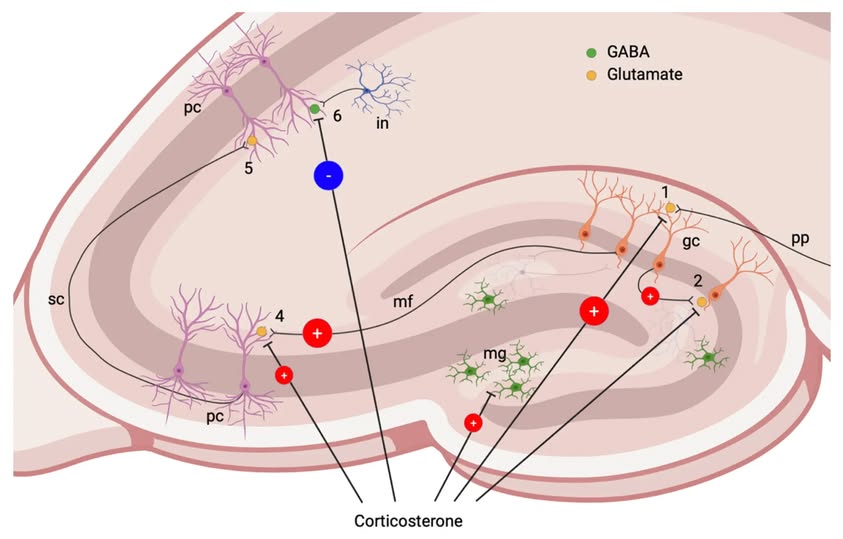
This week, I’ll address two different topics from the angle that is so central to my website and my book about the human brain: the various levels at which the human brain and the human mind are organized. My first topic today is how the neurons of the hippocampus are affected by chronic stress. The second is how the lower availability of a certain type of neurotransmitter receptor in widespread regions of the brain may contribute significantly to traits of autism. (more…)
Mental Disorders | Comments Closed
Friday, 9 January 2026
Migration of the website from thebrain.mgill.ca to thebrain.lecerveau.ca
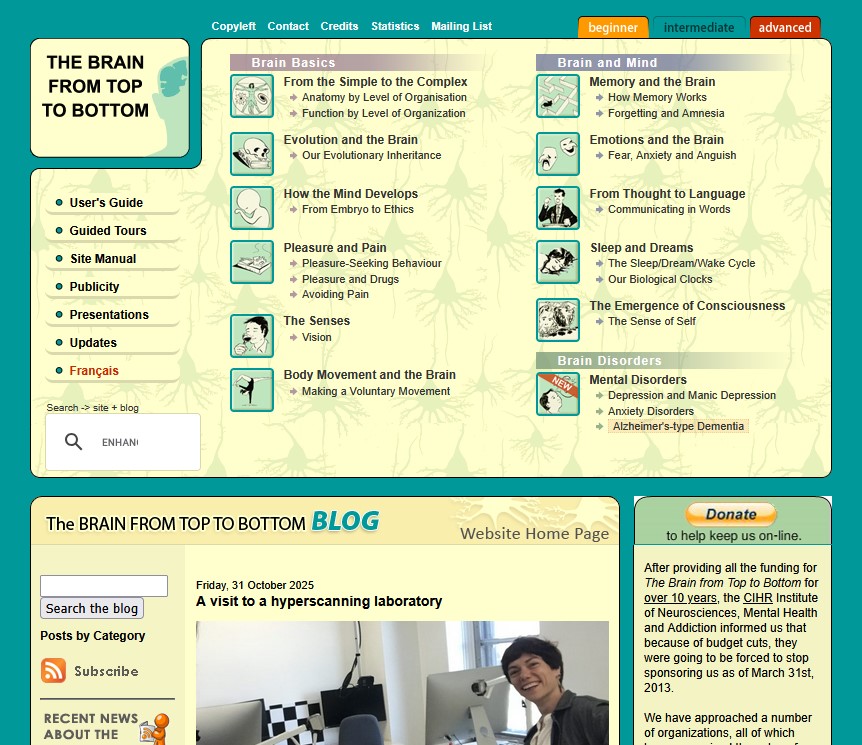
In December 2025, I migrated my website The Brain from Top to Bottom from www.thebrain.mcgill.ca to www.thebrain.lecerveau.ca. (If you have visited the site since then, you may not even have noticed, because if you type the old address into your browser, you are now redirected to the new one automatically, and that new address appears in the browser’s address bar.) At the same time, I migrated the French version of this site, Le cerveau à tous les niveaux, from www.lecerveau.mcgill.ca to www.lecerveau.ca. Here too, if you now type the old address, you will be directed to the new one automatically. The main reason that I made these moves is that the McGill University server that used to host this site was constantly being updated with new security and other features that were highly complex and incompatible with this site as I had originally designed it. In this post, I want to share the history behind my decision to migrate these sites. (more…)
From the Simple to the Complex | Comments Closed
