










Monday, 2 January 2023
Theories of consciousness
 .
.
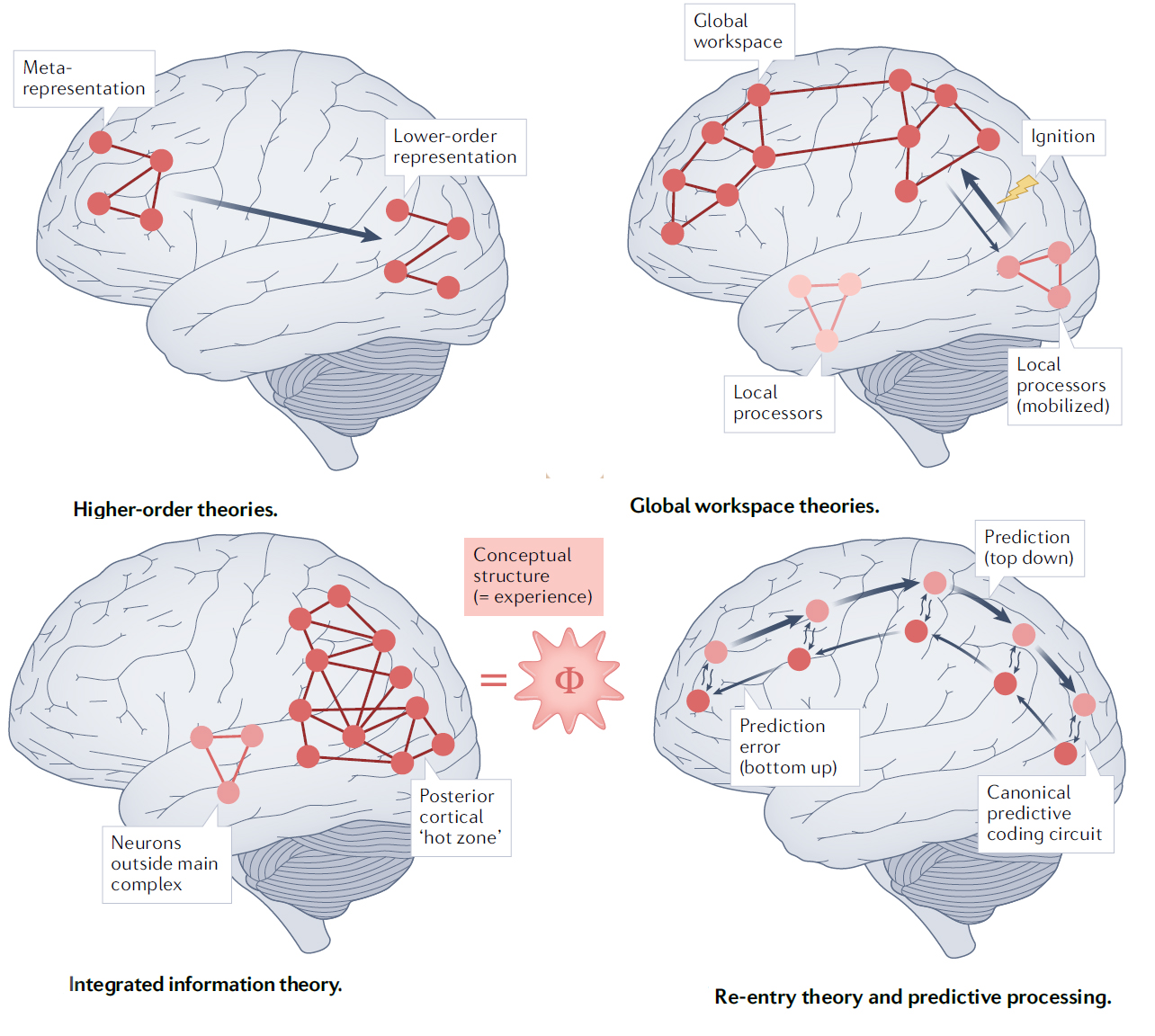
Today I’d like to tell you about an article that you really shouldn’t miss if you’re interested in the various theories of consciousness in the cognitive sciences: “Theories of consciousness”, by Anil K. Seth and Tim Bayne, published in Nature Reviews Neuroscience in May 2022. (more…)
The Emergence of Consciousness | Comments Closed
Thursday, 14 February 2019
A Summer School on Animal Sentience and Cognition
“Without consciousness the mind-body problem would be much less interesting. With consciousness it seems hopeless.” – Thomas Nagel
“What is it like to be a bat?” is the somewhat disconcerting title of philosopher Thomas Nagel’s famous 1974 article on the ineffability of subjective consciousness. In reality, we humans will never know what it is like to use echolocation to navigate as we fly through the air, because, unlike bats, we simply don’t have the bodies or the nervous systems to do so. But the question of animals’ experience in general is nevertheless highly relevant, if only because our human species has the faculty of language and has developed a scientific method that lets us make observations and deductions about the mental states of other human beings and other animals. And because humans domesticate, exploit and exterminate thousands of other animal species, knowing what they may experience becomes an ethical imperative to guide the way we treat them. (more…)
The Emergence of Consciousness | No comments
Monday, 13 June 2016
Conscious Awareness and Integration of Brain Activity: They Go Together
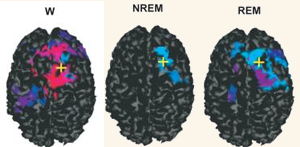
Sometimes the complementarity between certain scientific experiments may not actually prove anything but still points in a fairly obvious direction. And that is the case with a study that was brought to my attention by a reader of this blog (thanks, Pascal R.!) after I published two posts recently on studies of the type of neuronal activity associated with conscious awareness. Before I summarize the study that Pascal told me about, let me remind you about the findings of the two other studies. (more…)
The Emergence of Consciousness | No comments
Tuesday, 10 May 2016
Dynamics of complex networks sheds light on loss of consciousness associated with sleep
 When I read the abstract of the article “Hierarchical clustering of brain activity during human nonrapid eye movement sleep” published by Dr Habib Benali and his team in the April 2012 issue of the journal Proceedings of the National Academy of Sciences of the United States of America (PNAS), I quickly realized that the phenomenon that these authors had observed was pretty much the opposite of the one observed in a study by Douglass Godwin and his team: the temporary breakdown of the brain’s functional networks when an individual becomes aware of a stimulus. (more…)
Sleep and Dreams | No comments
Monday, 21 March 2016
Awareness as a Temporary Breakdown of the Brain’s Functional Networks
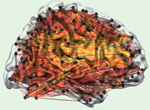
When you become consciously aware of something, what exactly is happening in your brain? Or stated differently, is there a geography of neuronal connections that is specific to becoming aware of a stimulus (for instance, a stimulus that is presented very briefly, so that you may or may not become aware of it)?
This is not a new question. It amounts to asking whether there are particular brain networks that are essential to awareness, or whether awareness instead emerges from the connectivity of large areas of our sensory and associative cortexes. This latter, global approach received support from a study published in March 2015 in the Proceedings of the National Academy of Sciences of the United States of America, entitled “Breakdown of the brain’s functional network modularity with awareness”, by Douglass Godwin and two collaborators. (more…)
The Emergence of Consciousness | No comments
